Put 100 g of crushed ice in one glass and 100 g as a single cube in another. The first turns to water in minutes; the second is still there long after. Why, if the weight is the same?
1. Contact surface
Ice melts from the surface, where it takes heat from the drink and the air. When we break a block into smaller pieces, we create much more surface. A 5 cm cube has 150 cm² of surface; the same volume split into 1 cm cubes has 750 cm² — five times more area melting at once.
2. Shape matters
For the same volume, a sphere has the least surface. That is why spheres are so popular for spirits on ice.
3. Density and clarity
Cloudy ice has micro air bubbles and internal cracks. In contact with a warmer drink, those cracks open, the ice cracks and splits — and every new fragment is more surface to melt. Dense, clear ice stays whole.
4. Starting temperature
Well-frozen ice (at −18 °C) takes longer to start melting than ice that is already “wet” at 0 °C. Keeping ice in the freezer until service makes a difference.
What this means in the glass
- To dilute little (whisky, old fashioned, negroni): a large cube, a sphere or a rectangular block.
- To chill and dilute fast (mojito, caipirinha, tiki): crushed ice.
- For shaking and stirring: hard standard cubes that chill without breaking down.
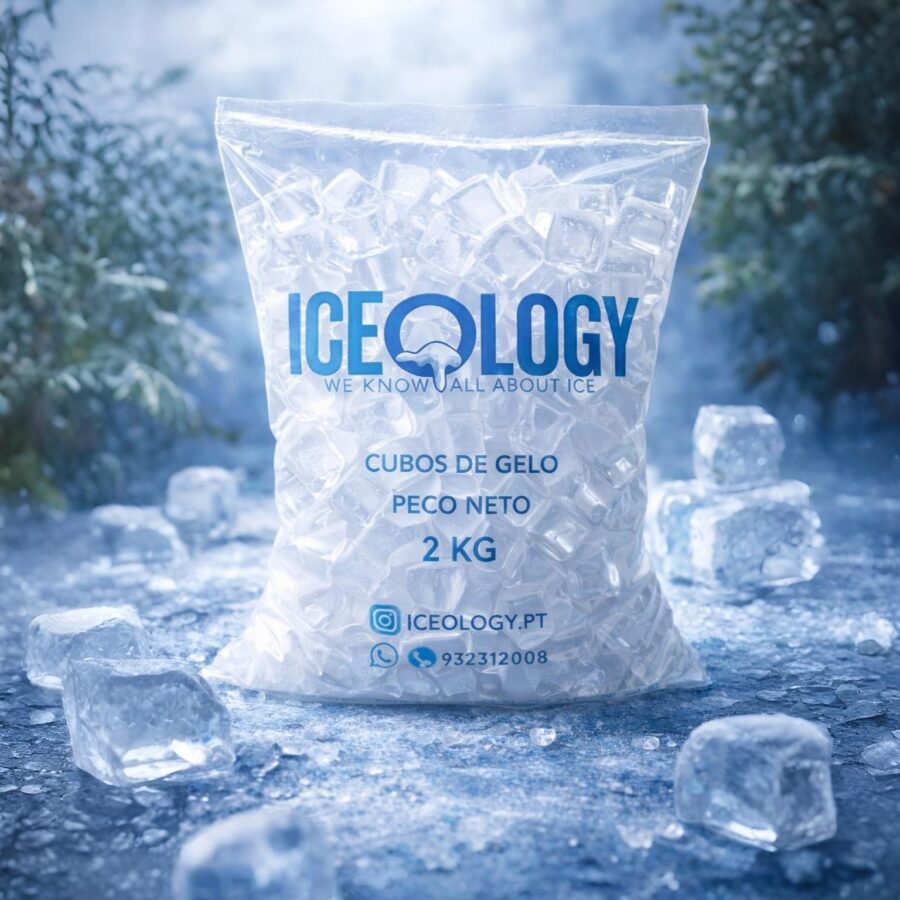
Explore the types of ice we make and choose the large ice cube or the rectangular ice for drinks with minimal dilution.