For anyone who likes whisky on ice, the question comes up early: sphere or large cube? Both exist for the same reason — to dilute less — but they are not the same.
What they have in common
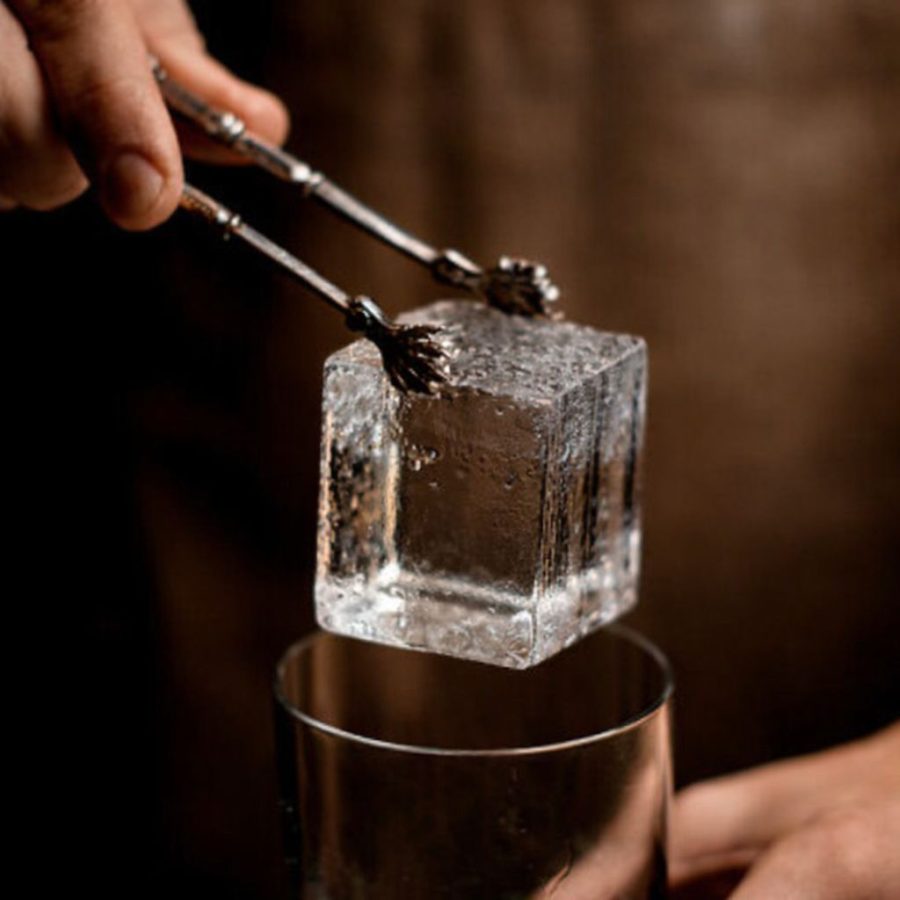
Both the sphere and the 5 cm cube are large, solid pieces. Compared with several small cubes of the same weight, they have far less surface touching the drink. Less surface means slower melting: the whisky chills without getting watery in the first minutes.
Dilution: the sphere wins by a nose
For the same volume, a sphere has the smallest possible surface. In practice a 60 mm sphere and a 50 mm cube behave similarly; the difference shows in long serves, when the glass stays on the table for a while.
Glass and service: the cube is more practical
- The cube fits flat-bottomed rocks glasses better and fills the space evenly.
- A sphere needs a wide-mouthed glass; in narrow glasses it can get stuck or bump when drinking.
- The cube is easier to store and handle in large quantities in a bar.
Presentation: the sphere is more theatrical
A clear sphere in a rocks glass instantly signals premium service. The large cube has a more classic look and is the traditional old fashioned format.
Our advice
- Neat whisky, slow serve, “wow” effect: 60–65 mm sphere.
- Old fashioned and stirred cocktails: 5 cm large cube.
- High-volume bar: large cubes for practicality, spheres for the premium menu.
Either way, choose clear ice: air bubbles make ice crack and melt faster. See our sphere ice and large ice cube.